A slab leak is a water line leaking underneath your home's concrete foundation — and it's the kind of problem that punishes waiting. The signs are easy to miss at first: a warm patch on the floor, the sound of running water when nothing is on, a water bill that climbs for no reason, or damp carpet along one wall. Under the slab, pressurized water is eroding soil and can crack the foundation itself.
We find slab leaks with acoustic listening equipment and thermal imaging that pinpoints the leak location through the concrete — no jackhammering the whole floor on a guess. Once located, we open the smallest possible access point, repair or reroute the damaged section, and restore the area. Most Stow slab leaks come from copper lines laid in the 1960s–70s that have thinned from decades of water chemistry and soil contact.
If your water meter spins when everything is off, or you've got an unexplained warm floor, call. A slab leak doesn't stabilize — every day it runs, the repair gets bigger.
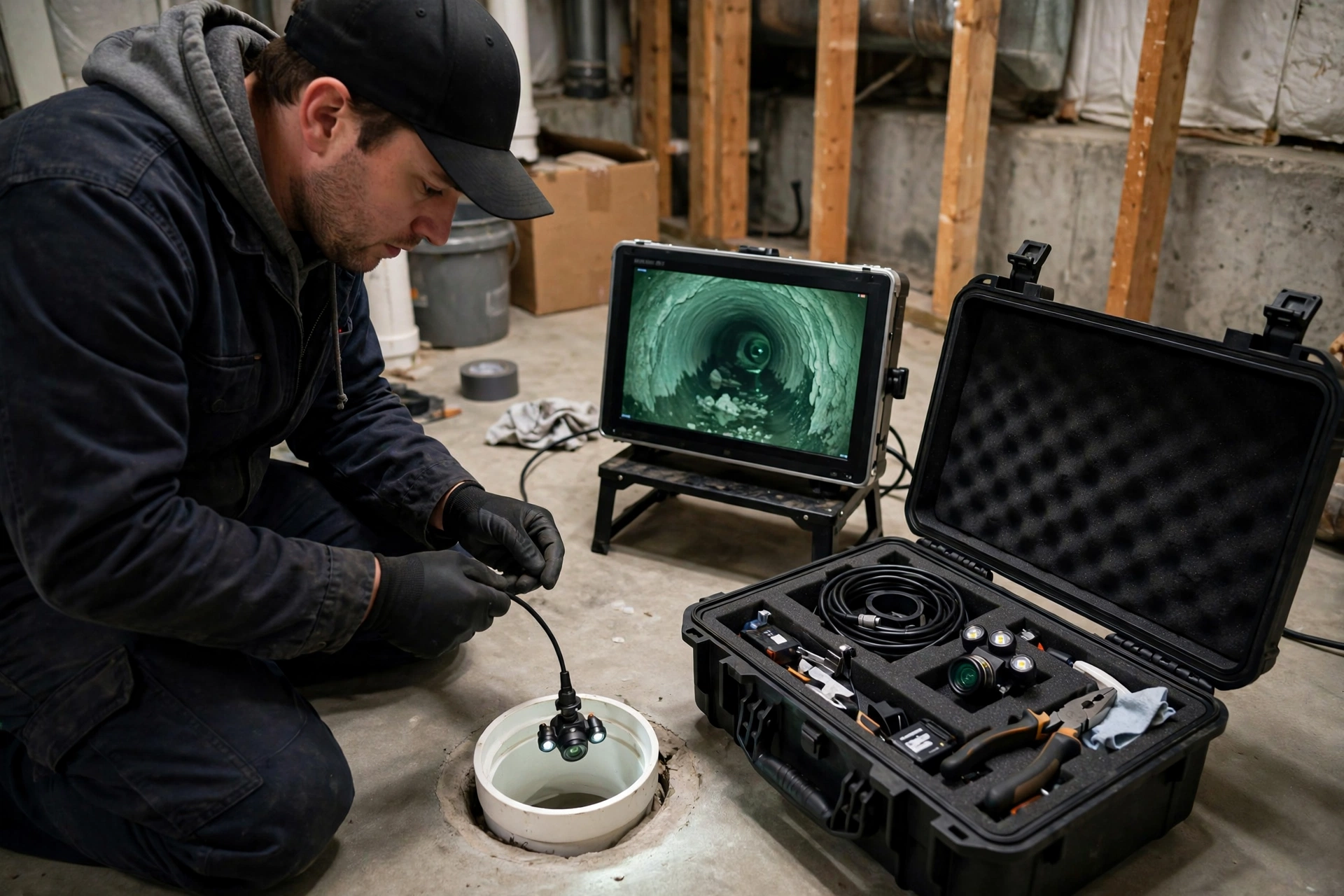
Signs of a slab leak
- Water bill rising with no change in usage
- Warm or hot spot on the floor
- Sound of running water when all fixtures are off
- Damp carpet, warped flooring, or mildew smell along walls
- Water meter moving when nothing is running
- Cracks appearing in floors or walls
How we repair slab leaks
1 Confirm the leak
We start with a meter test — if the meter moves with everything off, water is going somewhere it shouldn't. Then acoustic and thermal equipment locates the exact spot under the slab, so we open one targeted area instead of tearing up flooring.
2 Expose the line
A controlled opening through the slab at the leak point. We keep the access as small as the repair allows and protect the surrounding flooring.
3 Repair or reroute
Depending on the pipe's condition, we repair the damaged section or reroute a new line overhead — rerouting avoids future under-slab failures in the same run and is often the smarter long-term fix for aging copper.
4 Restore and verify
The line is pressure-tested, the slab patched, and the meter rechecked to confirm zero movement. You get a dry floor and a water bill that goes back to normal.
Slab leaks in Stow's housing stock
Much of Stow was built out in the 1960s and 70s on slab foundations with copper water lines run beneath the concrete — and that copper is now 50+ years into soil contact. Northeast Ohio's clay soil holds moisture against the pipe and shifts with freeze-thaw cycles, stressing joints and thin spots. The result: Stow sees more slab leaks than newer suburbs, usually announced by a warm kitchen or hallway floor. Because the leak is pressurized and hidden, early detection is everything — the difference between a single repair and foundation damage.
Need slab leak repair in Stow?
No forms, no waiting — one call connects you with a local technician.
(330) 952-8787 📞 Call Now